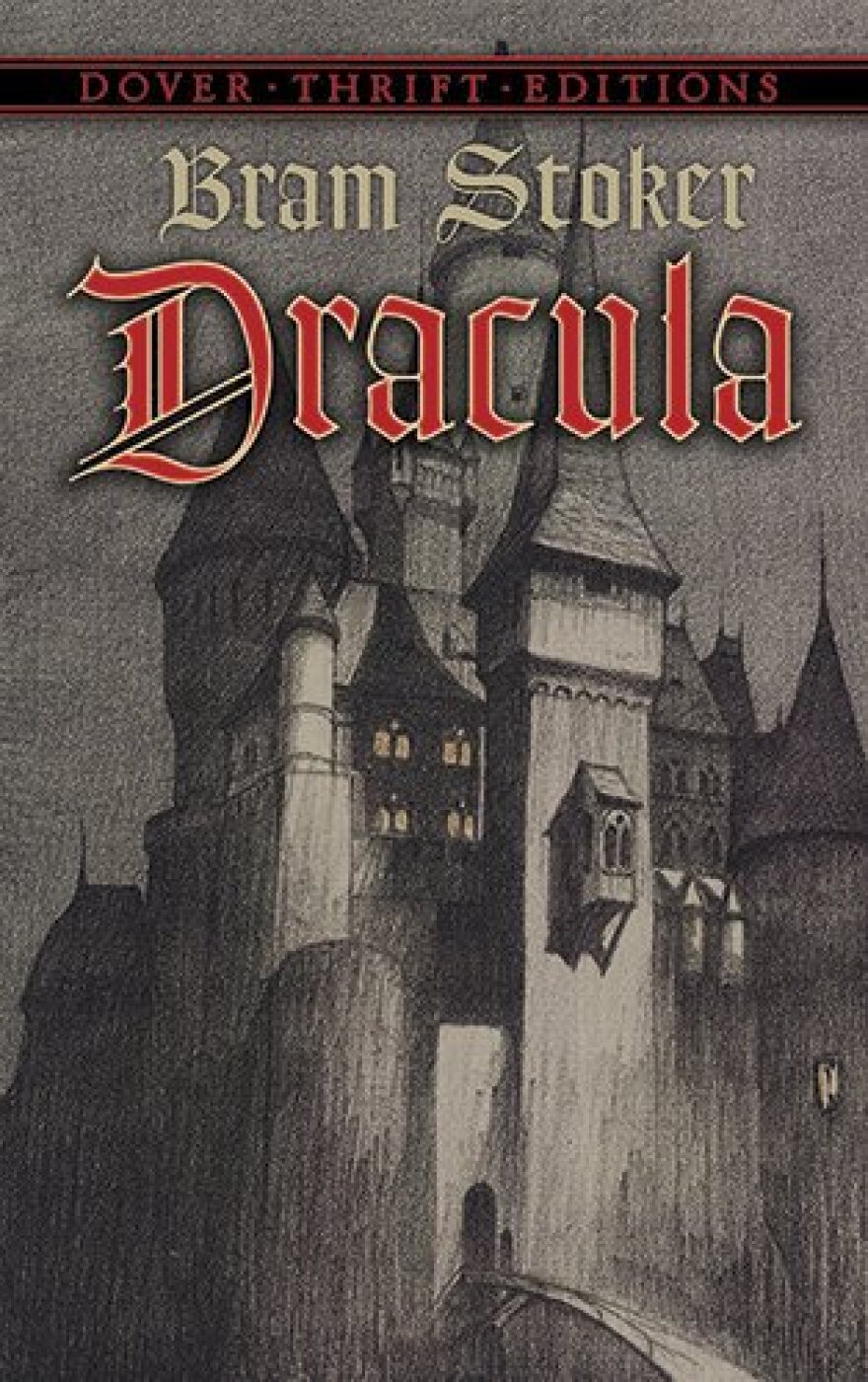
Dracula, the famous fictional vampire, was inspired by a real historical figure. Though he lacked fangs or immortality, Vlad the Impaler’s reign was marked by cruelty and bloodshed. Through his grotesque use of violence, he carved his name in history, leaving a legacy that continues to fascinate and horrify.
The Making of a Prince

Dracula’s life was marked by conflict very early on, navigating a world where any mistake could lead to his death. It is fascinating to see how the conditions of his childhood impacted the outcome of his life, leading to the Dracula we all know today.
Origins of Dracula – the Environment He was Shaped by
Vlad III Dracula was born in 1431 to a noble family that ruled over the Principality of Wallachia. Before his birth, Vlad II Dracul (Dracula’s father), entered an alliance with Emperor Sigismund of the Holy Roman Empire (and King of Hungary), called the ‘Order of the Dragon‘. The Order of the Dragon was an alliance by the Christians of eastern Europe to defend the continent from Islamic Turkish invaders (Ottoman Empire).
Prior to joining the Order of the Dragon, Vlad II was of the Basarab dynasty, the ruling family of Wallachia. Vlad II adopted the ‘Dracul’ name (meaning dragon in Romanian) in 1431. His son Vlad III Basarab was given the name ‘Vlad III Dracula’ (the added ‘a’ after ‘Dracul’ signifying that he is the son of Dracul).
Because Wallachia rested between two great powers (Kingdom of Hungary and Ottoman Empire), it was the subject of contention between the two sides. Both the Hungarians and Ottoman Empire believed that Wallachia was their vassal, meanwhile Wallachia sought independence from the two.
Stuck playing the middleman between two powers, Vlad II switched his allegiance from the Hungarians to the Ottomans after the death of Sigismund in 1437. Vlad II feared that Wallachia would no longer have Hungarian support and sided with the Ottoman Turks.
With the Turkish-Wallachian alliance, the Ottoman empire attempted an unsuccessful invasion on Transylvania (a region in Hungary). John Hunyadi, a Hungarian noble who was the main opponent to the Turks, managed to persuade Vlad II to become allies with the Hungarians once again. A second Ottoman invasion of Transylvania was attempted and dismantled, largely due to Wallachia switching alliances.
Vlad II was summoned by the Ottoman Sultan, Murad II, to explain his actions.
Unfortunately for Vlad II, the invitation was a trap, and he was arrested along with two of his sons. He was held captive by the Turks for a year, before they allowed him to go back to Wallachia and reclaim his place as Voivode (warlord/ruler). The Turks supported Vlad II as long as he left his sons captive within the Ottoman Empire, so they could strengthen their political ties with Wallachia and groom the future princes into Turkish vassals.
Formative Years
In the developmental years of their childhoods, Dracula (11 years old) and his younger brother Radu III (a.k.a the handsome) spent 5 years in Ottoman courts as political hostages under Murad II.
The highly impressionable Dracula and Radu further pursued their educations as princes under Turkish control, where they were greatly influenced by the Ottomans. While Radu embraced Ottoman culture, Dracula resisted and resented his captors. He was frequently punished for his defiance, forming a hatred that would later define his reign.
Dracula rejected many of the teachings and held on to his pride as a European Christian. Despite rejecting Ottoman rule, he still learned valuable lessons from his captors. He mastered their language, studied their military tactics, and witnessed impalement as a method of execution.
John Hunyadi opposed the Wallachian-Ottoman alliance and sought to replace Vlad II with a pro-Hungarian faction. The Danesti house rebelled against Vlad II with support from Hunyadi, killing his eldest son Mircea II by burning his eyes and burring him alive. Vlad II attempted to escape Wallachia, but he was unable to and was executed. Backed by the Hungarians, Vladislav II (not to be confused with Vlad II Dracul) seized control of Wallachia.
Seizing Power
Following the death of his father, Dracula was released by the Ottomans to reclaim his place as Voivode of Wallachia.
At about 17 years old, Dracula had a perfect window to regain control of his homeland. With Vladislav preoccupied in battle against the Turks and absent from Wallachia, Dracula seized the moment to reassert Draculesti rule and take back power.
Dracula, leading a small Ottoman-backed force to the Wallachian capitol, Targoviste, briefly held onto power for just a few months. Vladislav then quickly regrouped his forces and deposed him.
On the run from Vladislav, Dracula fled back to, Edirne, where he had been held captive by the Turks.
However, he was not safe there. Vladislav and Wallachia veered towards the power of the Ottoman Empire, turning their backs on Hunyadi and Hungary. Because Dracula’s strong political position with the Turks relied upon their desire to install a Turkish client into Wallachia, so now they would no longer need to support him. Murad backed Vladislav as Voivode; and realizing his life would be in danger, Dracula fled to the safety of his cousins in Moldavia.
A Prince on the Run
Voivode of Moldavia, Bogdan II, allowed Dracula to take refuge at his court; where he became close friends with Bogdan’s son, Stephen the Great. Dracula spent the time sharpening his warfare skills by joining Bogdan and Stephen in their battles against the Polish.
But once again, Dracula was forced to flee. Bogdan II was killed by his brother Peter Aaron, who usurped the title of Voivode in Moldavia. Because Stephen’s existence threatened the power of Peter’s rule, his life was then in danger.
Dracula and Stephen were surrounded by enemies, but like a game of musical chairs, Dracula would become allies with Hungary and would be their replacement puppet to rule Wallachia. John Hunyadi, who worried about Vladislav’s increasingly close relationship with the Turks, took the young Dracula under his guidance.
Vlad Dracula “The Impaler”

With the backing of Hungary and his former enemy John Hunyadi, Dracula returned to Wallachia in 1456 to reclaim the throne once more—this time, with more force, strategy, and vengeance. Vladislav II, the ruler who had previously ousted Dracula, died in battle during this campaign, allowing Vlad to finally secure the title of Voivode of Wallachia.
Once in power, Vlad III Dracula unleashed a reign of brutal repression. Determined to consolidate power and eliminate all opposition—internal and external—he adopted a ruling style characterized by fear, strict justice, and terror. His most infamous method of punishment was impalement, a slow, agonizing execution technique he had witnessed during his captivity under the Ottomans. He applied it with such frequency and severity that it earned him his lasting moniker: Vlad the Impaler.
Dracula targeted rival noble families (the boyars), foreign merchants, and criminals with equal fury. In one notable account, he invited hundreds of boyars to a feast under the pretense of reconciliation—then had them all arrested, impaled, or forced into labor. His motivation was both to avenge his father and brother, and to eliminate the treacherous noble class that had betrayed his family and destabilized the region.
A Reign of Terror
Dracula’s rule became legendary not just for his cruelty, but for its twisted sense of order. Crime, corruption, and lawlessness virtually disappeared from Wallachia, not because of justice, but because the punishment for even minor offenses was usually death. Thieves feared to steal, merchants were cautious to cheat, and dissenters were swiftly silenced.
Foreign emissaries and travelers alike told horrific tales of Vlad’s cruelty. One famous story recounts how he left a forest of impaled corpses—some 20,000 Turks—outside the city of Targoviste as a warning to invading Ottoman forces. When Sultan Mehmed II saw the field of corpses, he reportedly turned back, shaken by the sight.
While Vlad’s methods were undeniably monstrous, they earned him both fear and grudging respect. Many of his contemporaries saw him as a necessary evil—a brutal but effective leader defending his homeland from foreign domination and internal decay.
Fall from Power and Final Campaign
Vlad’s increasingly brutal rule and refusal to be anyone’s puppet—neither Hungarian nor Ottoman—earned him powerful enemies. By 1462, the Ottomans had grown tired of his provocations. Sultan Mehmed II launched a full-scale invasion to remove Vlad from power. Although Dracula mounted a fierce resistance, even launching a daring night attack on the Sultan’s camp, he was eventually forced to flee.
He was captured by Hungarian forces and imprisoned for over a decade, though later released and even rehabilitated politically. In 1476, with the backing of Hungarian and Moldavian allies, Dracula made one final attempt to retake Wallachia. He succeeded briefly, but his reign lasted only a few months before he was ambushed and killed. His body was reportedly decapitated and sent to the Sultan, while the location of his burial remains uncertain to this day.
Legacy: From Prince to Legend
Though Vlad Dracula ruled for only short periods, his legacy far outlasted his lifetime. To some Romanians, he is a national hero—a defender of Christian Europe against Ottoman encroachment. To others, he is a symbol of cruelty and tyrannical power. But it was centuries later, in 1897, that his legend would take on a new and darker form.
Irish author Bram Stoker, inspired by tales of Vlad the Impaler, used his name for the villain in his novel Dracula. Though the fictional Count Dracula shares little with the historical prince beyond his name and homeland, the association stuck. Vlad III’s real-life brutality gave chilling weight to the supernatural horror of Stoker’s vampire—cementing Dracula in Western imagination as both historical tyrant and immortal monster.